

Why study African history?
Beyond ethos, through material history and towards positive-sum progress

I enjoy studying African history and think it is important, because it gives us (more) examples of African societies functioning and prospering over a long time scale. Apart from the feel good or redemptive ethos of this, it also provides inspiring examples of how our societies can/might evolve
For example, international trade in Africa is fraught — for many reasons including language barriers, lack of infrastructure, poor borders and mis-implemented trade agreements. Thinking about West Africa specifically, I know that the mix of anglo- and francophone countries with differing government and financial systems has proven challenging. The ECOWAS organization has championed open borders and trade agreements, but many have arguably been underwhelming or mis-implemented.
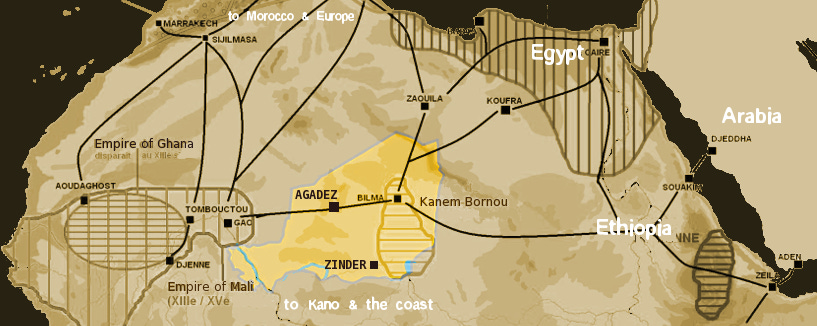
Considering the history of West Africa, we encounter a mishmash of states across the eastern and western fringes of the zones just south of the Sahara. These states or empires were often oriented around control of the trans Sahara trade routes. Further south, the forest and coastal zones served as sources of crucial goods like wood, game animals and salt. There were of course larger empires as well as smaller states and kingdoms, varying in degree of centralization, overlaps in culture and interactions, through trade as well as conflict.
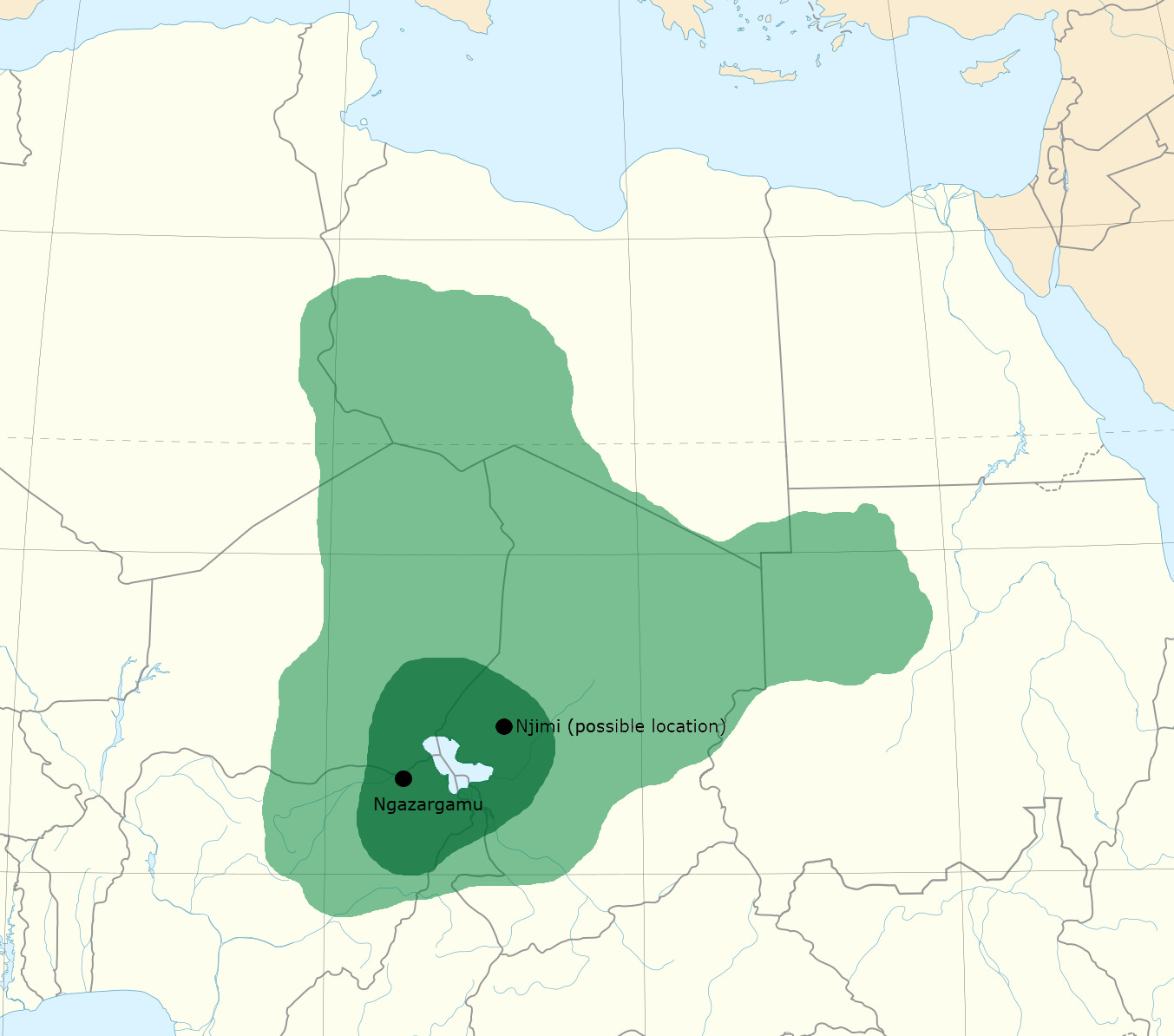
These early states were incentivized to both cooperate and be in rivalry over control of these resources. These states were able to grow to significant sizes and many persisted over centuries — notably the Kanem-Bornu empire which existed in the Lake Chad region from about 800/1000AD to 1800AD. They developed sophisticated royal & legal systems, trade routes, agricultural techniques and academic institutions (galvanized in part by the advent of Arabic writing system and Islam). We generally have more info on north/easterner west African states on the saharan fringe because of their contact with and adoption of Arabic writing system


So how can ancient African knowledge be applied to our future? The history is broad and deep, and we’ve only uncovered so much actual detail (usually the findings of European historians, paleontologists, anthropologists). But we definitely do know enough to ask more informed questions such that we can get answers like:
How have crops and animals been cultivated in the environment in a sustainable way?
How have key resources been traded, processed and used to build up societies?
How have societies developed individuals to be skilled contributors and leaders who unlock more progress?
How have opposed cultures formed symbiotic relationships, or what have they been in conflict over?
I acknowledge that African societies today are vastly different (larger for one thing) than they’ve been before. But there remains the persisting cultural/anthropological and geographic patterns we can learn from, in terms of how to better interact with each other and our environment.
I’ll close out with a few key qualifiers:
This effort must be done without an “essentialist” bent, of taking certain tropes and deeming them the whole story, as the truth of history remains complex beyond our grasp. Progress is more potent when collaborative, inclusive and positive-sum.
We must remain deeply inquisitive about our past/present/future, experiment and learn what information/skills can helps us move forward. Adapting historical knowledge might resemble an alchemical process, combining ancient creative processes with modern science and technology.
There is much obscuring our history but much opportunity remains to uncover and learn more. I believe there is an abundance of value in an approach towards future progress that’s deeply grounded in history.